 info@euprera.org
 Facebook
 YouTube
 LinkedIn


ECM Benchmarking Tool: Fake News & Information Provision
Two out of three communication professionals have followed the debate about fake news, but only 12 percent of the affected organisations have established advanced routines in dealing with them. And while 90 percent of the surveyed departments and agencies deliver information to decision-makers, the provided reports differ.
How do you compare to your peers in dealing with fake news and providing information? Start the survey and find out. It is easy and fun to use, takes just a few minutes and is totally anonymous.
On the first page, we ask you for some information on your work place, position and country to make your answers comparable to the results of those of the latest European Communication Monitor study. If you want to have your name and the name of your company on a certificate with your personal score, please leave it here. None of this information will be stored.
After completing the survey, you‘ll get an explanation of your results and your personal score. A score of 50 represents the average result of communicators across Europe. A score higher than 50 means you are better in comparison, a score lower than 50 means your results are worse.
Try it now
The European Communication Monitor (ECM), together with its affiliated surveys Latin American Communication Monitor (LCM), Asia-Pacific Communication Monitor (APCM), North American Communication Monitor (NACM), is part of the Global Communication Monitor series, the largest regular global study in the field of strategic communication and public relations worldwide, with a longitudinal participation of more than 30,000 practitioners.


 Professor Ansgar Zerfass, lead researcher of the survey, explained: “During the last 12 months we have experienced significant events on the world geo-political stage with impact and implications for strategic communication. While the European Communication Monitor continues to track the specifics of the communicator’s role we are also interested in mapping and monitoring the influence of wider societal issues, from economic and cultural developments to technological change, and understand their implications on practice.”
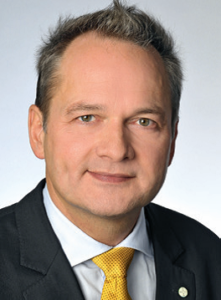 “What stands out most of all from this year’s Monitor is the recognition of the important operational and strategic contribution that communications makes to an organisation’s success, with more than 70% approval rates, with the communications function emerging as a key supporter for daily management and the operations of other departments,” said Herbert Heitmann, president of the European Association of Communication Directors (EACD). He added: “However, top management is not aware of the full range of contributions that communications can deliver. More efforts are necessary to close this expectation gap.”