 info@euprera.org
 Facebook
 YouTube
 LinkedIn

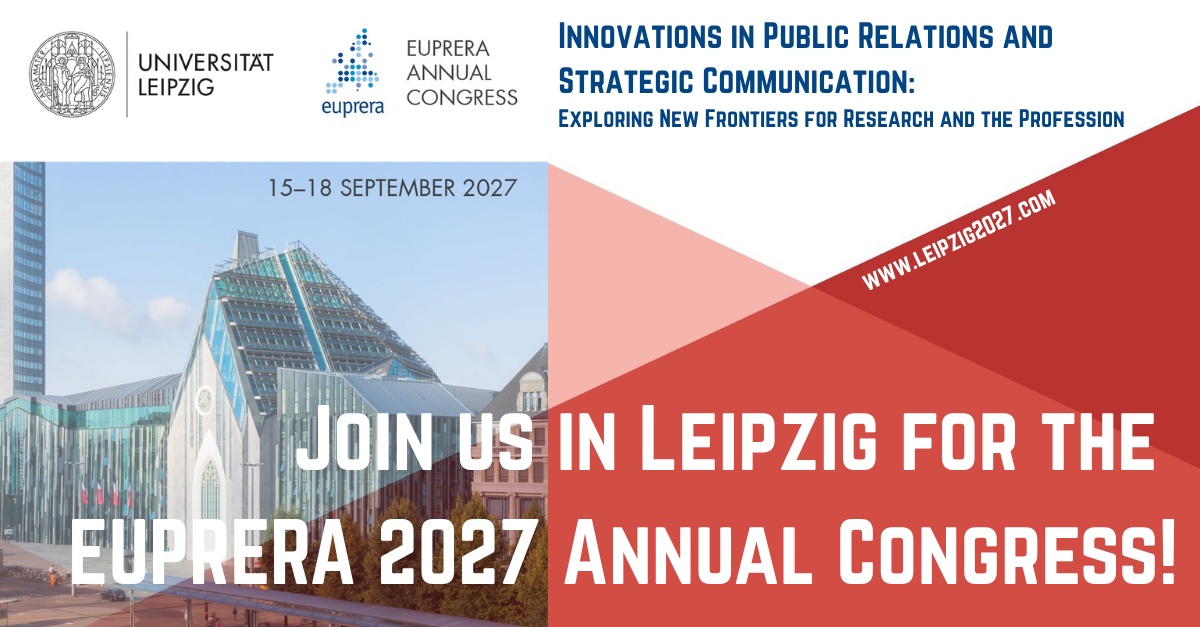
Call for Papers: 2027 EUPRERA Annual Congress in Leipzig
The 2027 EUPRERA Congress will be titled: “Innovations in Public Relations and Strategic Communication: Exploring New Frontiers for Research and the Profession”.
HOST UNIVERSITY
The EUPRERA Congress will be hosted by Leipzig University, founded in 1409 and recognised as one of the oldest universities in Europe and among Germany’s leading research universities. With more than 30,000 students and a strong international orientation, the university combines academic excellence with a rich intellectual and cultural heritage.
The Institute of Communication and Media Studies traces its origins back to 1916 and is regarded as one of the birthplaces of communication science in Europe. Since the 1990s, the institute has also become internationally recognised for its research and teaching in communication management. The small team working in this field has published more than 100 books, as well as numerous articles and studies, leads collaborative research projects across many countries and is strongly engaged in knowledge transfer between academia and professional practice.
THE THEME
Innovation has become one of the defining forces shaping societies, organisations, media systems, and professional communication. Technological breakthroughs, geopolitical transformations, changing stakeholder expectations, and new forms of participation are reshaping the environments in which public relations and strategic communication operate.
Artificial intelligence, synthetic media, automation, data analytics and platform-based communication ecosystems are transforming the way organisations monitor public opinion, produce content, communicate with stakeholders and evaluate the impact of communication. This leads to new societal expectations regarding transparency, responsibility and trustworthiness.
Innovation, however, is not limited to technology. Organisations are also experimenting with new forms of governance, leadership, collaboration and professional development. Communication professionals increasingly operate in complex environments that require new competencies, new mandates for communication departments and new business models for agencies. These developments require both theoretical reflection and practical innovation.
The EUPRERA 2027 Annual Congress invites scholars to explore how innovation is reshaping public relations and strategic communication research, education and professional practice. The congress aims to provide a forum for discussing both opportunities and tensions connected to innovation: Which innovations contribute to more effective and socially responsible communication? Which innovations challenge existing theories, methods, professional roles and organisational structures? How can communication scholarship contribute to understanding and shaping these developments?
CALL FOR PAPERS
The organisers of the EUPRERA Congress in Leipzig welcome theoretical, empirical, and applied research on the congress theme and look forward to stimulating discussions in various thematic areas and an additional education and open track. Interested authors should submit short-length, full-length papers, research panel or academia-practice collaboration panel (new format!) proposals in one of the track options using the Congress cover page. Abstract submissions will not be reviewed and will be automatically disqualified.
Congress CfP & Cover page
CONGRESS TRACKS
- TRACK ONE: Emerging Societal and Professional Challenges for Communication Management
- TRACK TWO: Organising and Managing Communication Functions for the Future
- TRACK THREE: Innovating Strategic Communication Practice and Stakeholder Engagement
- TRACK FOUR: Technological Developments, Artificial Intelligence and Digital Innovation
- EDUCATION TRACK: Novel Approaches in Public Relations Education, Competencies Development and Knowledge Transfer
- OPEN TRACK: Current Research in Communication Management and PR
FOUR TYPES OF SUBMISSIONS ARE POSSIBLE:
- Short-length paper (double-blind review)
- Full-length research paper (double-blind review)
- Research panel proposal
- Academia-practice collaboration panel proposal (new format!)
IMPORTANT DEADLINES
March 30 – Submission deadline
May 30 – Feedback to authors
June 30 – Full program released
AWARDS
During the 2027 Congress the following recognitions will be awarded.
EUPRERA Annual Best Paper Awards
EUPRERA Best Reviewer
EUPRERA PhD Award for Excellent Doctoral Thesis
EUPRERA Master Thesis Award for Excellence
CONTACT & IMPORTANT LINKS
E-mail: congress2027@euprera.org
Website: www.leipzig2027.com
ConfTool (submissions): www.conftool.net/euprera2027









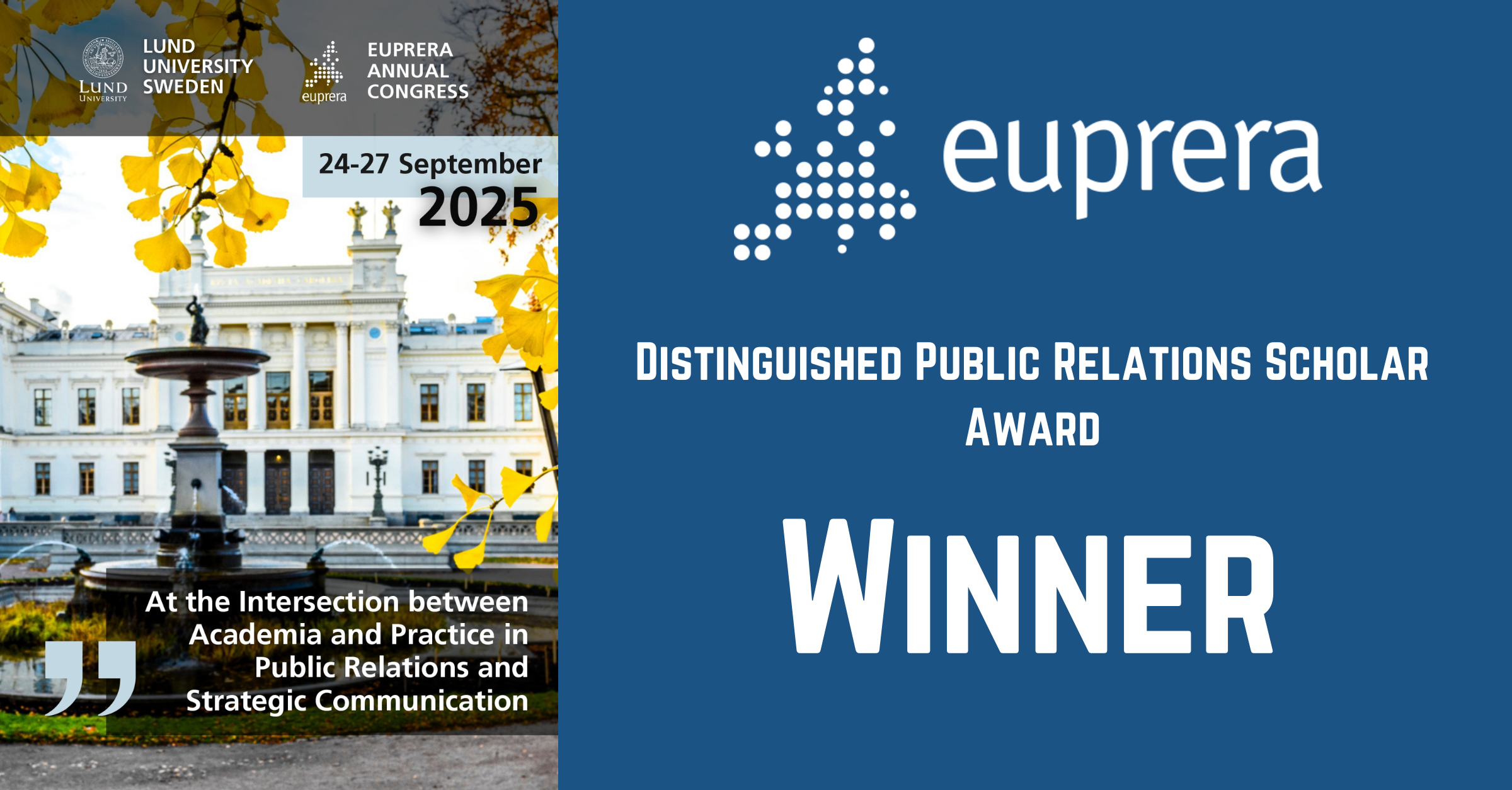
 He was awarded on September 26, 2025, at Lund University, Sweden, on the occasion of the EUPRERA annual Congress.
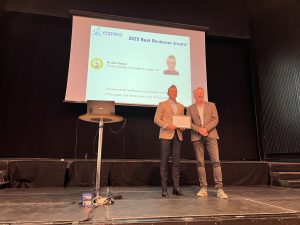

 The thesis stands out for its theoretical innovation, methodological depth, and strong contribution to advancing communication research. Introducing the Dual Process Model of Image Transfer (DPMIT), Dr. Hagelstein bridges psychology and public relations in a novel way, offering a comprehensive framework for understanding how individual representatives shape organisational image through personalised communication. Grounded in cognitive psychology, the model was tested through three high-quality experiments involving nearly 1,000 participants, examining affective versus cognitive, explicit versus implicit, and controlled versus automatic processes of image transfer. The empirical design demonstrates exceptional methodological rigour and a clear grasp of both theoretical and applied dimensions of communication.
